English Grammar in Use PDF: A Comprehensive Guide
English Grammar in Use, a renowned resource, offers a detailed exploration of the English language, presented in a clear and accessible format for learners of all levels.
This guide, available as a PDF, meticulously covers essential grammar points, providing ample exercises and real-world examples to solidify understanding and enhance proficiency.
The latest edition, with ISBN variations for different formats, ensures learners have options tailored to their needs, including versions with and without answers.
English Grammar in Use stands as a cornerstone for English language learners globally, offering a uniquely accessible and comprehensive approach to mastering the intricacies of the language. This resource, frequently sought as a PDF download, isn’t merely a textbook; it’s a self-study companion designed to build confidence and accuracy.
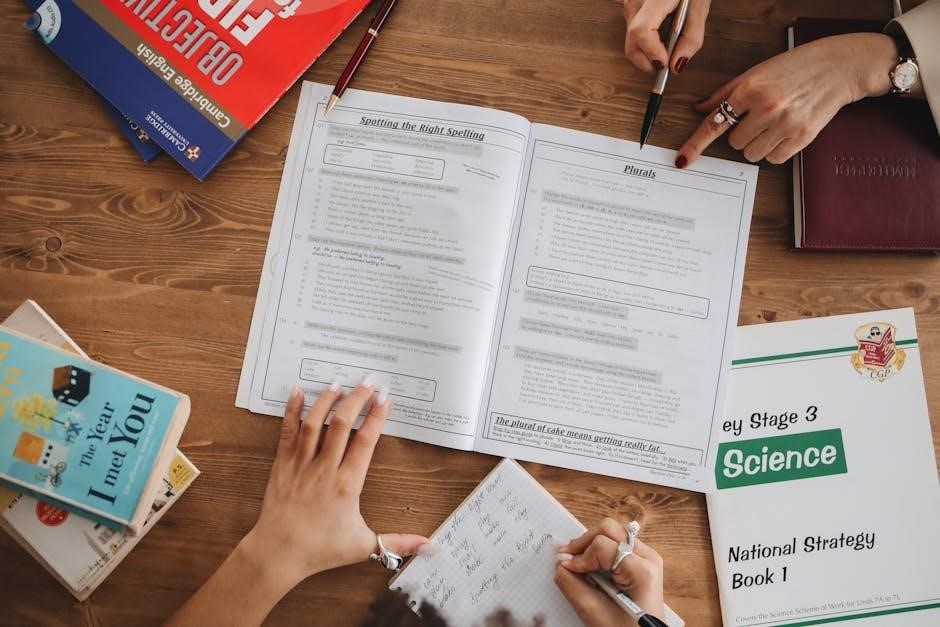
The book’s strength lies in its visual layout, presenting grammar points on left-hand pages with corresponding practice exercises on the right. This format encourages active learning and immediate application of concepts. It caters to a wide spectrum of learners, from beginner to intermediate levels, and is frequently used in classroom settings and for self-directed study.
The PDF version provides convenient access to this invaluable resource, allowing learners to study anytime, anywhere. Its enduring popularity stems from its clarity, practicality, and effectiveness in helping individuals achieve fluency and grammatical precision.
What is “English Grammar in Use”?
English Grammar in Use is a globally recognized grammar reference and practice book, often accessed as a convenient PDF. Created by Raymond Murphy, it’s renowned for its clear explanations and practical exercises, making it ideal for self-study or classroom use. The book distinguishes itself through its unique format: each left-hand page presents a grammar point, while the facing right-hand page offers related exercises.
This structure allows learners to immediately apply what they’ve learned, reinforcing understanding and building confidence. The PDF version maintains this effective layout, offering portability and accessibility. It’s a favorite among students preparing for exams like IELTS and TOEFL, as well as those seeking to improve their everyday English communication skills.
Essentially, it’s a complete grammar course in one volume, designed to help learners of all levels achieve accuracy and fluency.
The Fifth Edition: Key Updates (2025)
The Fifth Edition of English Grammar in Use, released in 2025, builds upon the established success of previous versions, offering updated content and enhanced features. Available as a PDF and in various formats – including with and without answers, and an interactive ebook – it reflects current English usage and addresses common learner errors.
Key updates include new grammar points, revised explanations for clarity, and a greater emphasis on practical communication. The exercises have been refreshed with contemporary examples, ensuring relevance for today’s learners. The ISBN 978-1-108-45765-1 identifies the Student’s Book with answers, while 978-1-108-58662-7 includes answers and the ebook.
Cambridge University Press continues to refine this essential resource, maintaining its position as a leading grammar guide.

Understanding the Different Editions
English Grammar in Use comes in varied editions, including those with or without answers, and an interactive ebook, catering to diverse learning preferences and needs.
ISBN Variations: Student’s Book with/without Answers
English Grammar in Use offers flexibility with its Student’s Book editions, recognizing diverse learning approaches. The ISBN 978-1-108-45765-1 designates the Student’s Book with answers, providing immediate self-assessment and facilitating independent study.
Conversely, the ISBN 978-1-108-45768-2 identifies the Student’s Book without answers, encouraging learners to actively practice and seek feedback from teachers or peers, fostering deeper engagement.
For those desiring a combined experience, ISBN 978-1-108-58662-7 represents the Student’s Book bundled with answers and the interactive ebook, offering a comprehensive learning package. These variations ensure students can select the resource best suited to their individual learning style and requirements, maximizing their grammatical understanding.
Interactive Ebook Availability
English Grammar in Use extends its learning experience beyond the printed page with a dedicated interactive ebook, identified by ISBN 978-1-108-45771-2. This digital version transforms traditional grammar study into an engaging and dynamic process.
The ebook incorporates interactive exercises, audio pronunciations, and additional practice activities, catering to diverse learning preferences. Learners can annotate directly within the text, track their progress, and access supplementary materials with ease.
This format is particularly beneficial for on-the-go learning and provides a seamless transition between study environments. The interactive ebook complements the Student’s Book, offering a modern and effective approach to mastering English grammar, enhancing comprehension and retention.
Supplementary Exercises: Expanding Your Learning
To further reinforce understanding and provide extensive practice, English Grammar in Use offers a dedicated set of Supplementary Exercises, identified by ISBN 978-1-108-45773-6. These exercises are designed to challenge learners and solidify their grasp of complex grammatical concepts.
Going beyond the core material, the supplementary exercises present a wider range of contexts and applications, promoting fluency and accuracy. They are ideal for self-study, homework assignments, or classroom activities, offering teachers valuable resources for tailored instruction.
This additional resource ensures a comprehensive learning journey, allowing students to build confidence and achieve mastery of English grammar. The exercises are carefully crafted to complement the main text, providing a robust and effective learning experience.

Core Grammar Topics Covered
English Grammar in Use systematically covers fundamental grammar areas, including present and past tenses, perfect tenses, and future expressions, with detailed explanations and practice.
Present Tenses: Foundations of Communication
Present tenses form the bedrock of everyday English communication, and English Grammar in Use dedicates significant attention to mastering their nuances. The resource meticulously breaks down the Present Continuous (I am doing), illustrating its use for actions happening now or around the present time, and temporary situations.
Conversely, the Present Simple (I do) is explored for habitual actions, facts, and general truths. A crucial section then contrasts these two tenses – Present Continuous vs. Present Simple (I am doing and I do) – across two parts, clarifying when to employ each for accurate and effective expression.
Through clear explanations and practical examples, learners gain a solid understanding of how to utilize present tenses confidently in various contexts, building a strong foundation for further grammatical exploration.
Present Continuous (I am doing)
The Present Continuous (I am doing), as detailed in English Grammar in Use, describes actions happening now, at the moment of speaking. It’s formed using the present tense of the verb “to be” (am, is, are) plus the present participle (verb + -ing). This tense vividly portrays ongoing activities, offering a snapshot of what’s currently unfolding.
However, its application extends beyond immediate actions. It also conveys temporary situations – things happening around now, but not necessarily at this precise second. Furthermore, the Present Continuous can express planned future arrangements, adding another layer of functionality.
The guide provides numerous examples and exercises to solidify understanding, ensuring learners can confidently construct and interpret sentences using this dynamic and versatile tense.
Present Simple (I do)
As explained in English Grammar in Use, the Present Simple (I do) expresses habits, general truths, and facts. It’s constructed using the base form of the verb, adding ‘-s’ or ‘-es’ for third-person singular subjects (he, she, it). This tense paints a picture of routine and permanence, describing things that happen regularly or are consistently true.
Beyond habits, the Present Simple is crucial for stating schedules – fixed events with specific times. It also finds use in narratives and summaries, providing a concise overview of events. The guide emphasizes the importance of correct subject-verb agreement, a key aspect of mastering this fundamental tense.
Through clear explanations and practical exercises, learners gain proficiency in utilizing the Present Simple effectively.
Present Continuous vs. Present Simple (I am doing and I do) ‒ Part 1
English Grammar in Use dedicates significant attention to differentiating between the Present Continuous (I am doing) and the Present Simple (I do). This section, Part 1, focuses on situations where these tenses contrast most sharply. The Present Continuous describes actions happening now, at this very moment, or around this time – temporary situations.
Conversely, the Present Simple denotes habits, routines, and general truths – things that are consistently or generally true. The guide highlights that using the wrong tense can drastically alter meaning. For example, “I am reading a book” implies current activity, while “I read a book” suggests a habitual action.
Understanding this distinction is vital for clear and accurate communication, and the PDF provides numerous examples to illustrate these differences.
Present Continuous vs. Present Simple (I am doing and I do) ‒ Part 2
Building upon Part 1, this section of English Grammar in Use delves deeper into the nuances of choosing between the Present Continuous (I am doing) and the Present Simple (I do). The PDF clarifies that while the Present Simple describes states, the Present Continuous often describes changing situations or trends.
Furthermore, it addresses situations where both tenses seem possible, but subtle differences in meaning apply. The guide emphasizes that certain verbs, known as ‘state verbs’ (like ‘know’, ‘believe’, ‘understand’), are generally not used in the continuous form.
The libro grammar in use pdf provides extensive practice exercises to help learners master these complex distinctions, ensuring accurate and natural English usage.
Past Tenses: Describing Completed Actions
This section within English Grammar in Use, readily available as a PDF, focuses on effectively conveying actions completed in the past. The core of this exploration lies in mastering the Past Simple (I did) and the Past Continuous (I was doing) tenses.
The libro grammar in use pdf meticulously explains how the Past Simple denotes finished actions at a specific time, while the Past Continuous describes actions in progress at a particular moment in the past. It highlights how these tenses often work together to paint a more vivid picture of past events.
Numerous examples and practice exercises are included to solidify understanding, enabling learners to accurately narrate past experiences and events with clarity and precision.
Past Simple (I did)
The Past Simple tense, comprehensively covered in the libro grammar in use pdf, is fundamental for describing completed actions in the past. This section details its formation – typically by adding ‘-ed’ to regular verbs, and utilizing irregular verb forms which are extensively listed within the resource.
The PDF emphasizes that the Past Simple is used for actions finished at a definite time, often signaled by time expressions like “yesterday,” “last week,” or “in 2023.” It clarifies how to construct affirmative, negative, and interrogative sentences using this tense.
Through clear explanations and abundant practice exercises, learners gain confidence in accurately conveying past events, mastering this essential building block of English grammar.
Past Continuous (I was doing)
The libro grammar in use pdf dedicates a section to the Past Continuous tense, explaining its use for actions in progress at a specific time in the past. Formation involves using “was/were” + the present participle (verb + -ing), clearly illustrated with numerous examples.
This section highlights how the Past Continuous often describes background actions while another action interrupted it, frequently using “when” to connect the two. The PDF emphasizes its application for setting the scene or describing temporary situations in the past.
Through detailed explanations and practical exercises, learners develop a strong understanding of when and how to effectively utilize the Past Continuous to convey nuanced meaning.
Perfect Tenses: Connecting Past to Present
English Grammar in Use PDF expertly explains perfect tenses, bridging past experiences with present results, offering clarity and practical application for learners.
Present Perfect: Experiences and Results
English Grammar in Use meticulously details the Present Perfect tense, focusing on its dual role in conveying experiences and highlighting present results of past actions.
The PDF resource clarifies Present Perfect 1 (I have done), emphasizing completed actions with relevance to now, and Present Perfect 2 (I have done), exploring indefinite times in the past.
Furthermore, it comprehensively explains the Present Perfect Continuous (I have been doing), showcasing ongoing actions started in the past and continuing to the present moment.
Crucially, the guide contrasts the Present Perfect Continuous with the simple Present Perfect (I have been doing and I have done), illustrating nuanced differences in emphasis and application.
Through clear explanations and practical examples, learners gain a solid understanding of this vital tense, enhancing their ability to communicate effectively.
Present Perfect 1 (I have done)
English Grammar in Use’s PDF edition dedicates significant attention to Present Perfect 1 (I have done), explaining its core function: describing actions completed at an unspecified time in the past, where the focus is on the result now.
The resource emphasizes that the exact time of the action isn’t crucial; what matters is its present relevance. It clarifies the structure – have/has + past participle – with numerous examples.
Learners discover how this tense differs from the Past Simple, understanding that the Present Perfect connects the past to the present, while the Past Simple describes finished actions in a defined past.
The guide provides exercises to practice forming the tense correctly and using it in context, solidifying comprehension and building confidence in applying this essential grammatical structure.
It’s a cornerstone for fluent and accurate English communication.
Present Perfect 2 (I have done)
English Grammar in Use’s PDF resource expands on the Present Perfect with a dedicated section – Present Perfect 2 (I have done) – focusing on experiences and life events. It clarifies how this tense is used to talk about things that have happened at some point in one’s life, without specifying when.
The guide highlights common time expressions used with this tense, such as “ever,” “never,” “before,” and “yet,” illustrating their placement within sentences. It emphasizes the difference between asking “Have you ever…?” and “Did you ever…?”
Numerous examples demonstrate how to discuss travel, achievements, and significant moments using the Present Perfect, connecting past experiences to the present state. Practice exercises reinforce correct usage and build fluency.
This section is crucial for learners aiming to discuss their personal history and understand others’ experiences effectively.
Present Perfect Continuous (I have been doing)
The English Grammar in Use PDF comprehensively explains the Present Perfect Continuous (I have been doing), detailing its use for actions that started in the past and continue up to the present moment. It emphasizes the focus on the duration of the activity rather than its completion.
The guide clarifies the formation of this tense – “have/has + been + verb-ing” – and provides numerous examples illustrating its application in everyday contexts. It highlights how it often conveys a sense of ongoing effort or a recent activity with visible results.
Exercises within the PDF help learners distinguish between the Present Perfect Simple and Continuous, focusing on subtle differences in meaning and appropriate usage. It also covers common time expressions like “for” and “since” in relation to this tense.
Mastering this tense is vital for describing processes and activities in progress.
Present Perfect Continuous vs. Simple (I have been doing and I have done)
The English Grammar in Use PDF dedicates significant attention to differentiating between the Present Perfect Continuous (I have been doing) and the Present Perfect Simple (I have done). It explains that while both relate to the past and present, they emphasize different aspects.
The Continuous form highlights the duration and ongoing nature of an activity, often implying it might continue, while the Simple form focuses on the completion of an action and its result. The PDF provides clear examples, such as “I have been studying for three hours” (ongoing process) versus “I have finished my homework” (completed action).
Exercises within the resource guide learners to choose the correct tense based on context, reinforcing understanding of these nuanced differences. It stresses recognizing keywords and phrases that signal each tense’s appropriate use.
This distinction is crucial for accurate and effective communication.
Duration and Time with Perfect Tenses
The English Grammar in Use PDF thoroughly explores how to express duration and specific time periods when utilizing perfect tenses. It details the proper usage of “for” and “since” with the Present Perfect Continuous and Simple tenses, clarifying their distinct roles in indicating time.
“For” denotes a period of time – “I have been waiting for two hours” – while “since” specifies a starting point – “I have lived here since 2010.” The PDF emphasizes that these prepositions are integral to conveying precise temporal information.
Furthermore, it addresses questions like “How long have you (been)…?”, demonstrating how to elicit and respond to inquiries about the duration of an action. Numerous practice exercises reinforce correct application of these concepts;
Mastering these elements is vital for fluent and accurate expression.
“How long have you (been)…?”
The English Grammar in Use PDF dedicates specific attention to the interrogative form “How long have you (been)…?”, crucial for inquiring about the duration of an ongoing action or state. This question structure invariably pairs with the Present Perfect Continuous or Present Perfect Simple tenses.
For instance, “How long have you been learning English?” seeks the duration of the learning process, typically answered with “For” + a period of time (e.g., “For five years”) or “Since” + a starting point (e.g., “Since 2020”).

The PDF clarifies the subtle differences in nuance when using each tense in response, emphasizing that the Present Perfect Continuous highlights the activity’s continuation, while the Present Perfect Simple focuses on the result.
Extensive examples and exercises solidify understanding of this common and essential question form.
“For” and “Since”: Specifying Time Periods
The English Grammar in Use PDF provides a detailed explanation of “for” and “since,” prepositions vital for specifying time periods when utilizing Perfect Tenses. “For” indicates a duration – a length of time. Examples include “I have lived here for ten years” or “She has been studying for three hours.”
Conversely, “since” denotes a starting point in time. It’s used with a specific date or event, such as “He has worked at the company since January” or “We have known each other since high school.”
The PDF emphasizes the correct tense pairing: Present Perfect Simple or Present Perfect Continuous are used with both “for” and “since”, highlighting the connection between a past action and the present.
Numerous practice exercises within the PDF reinforce the accurate application of these prepositions.

Past Perfect and Habitual Actions
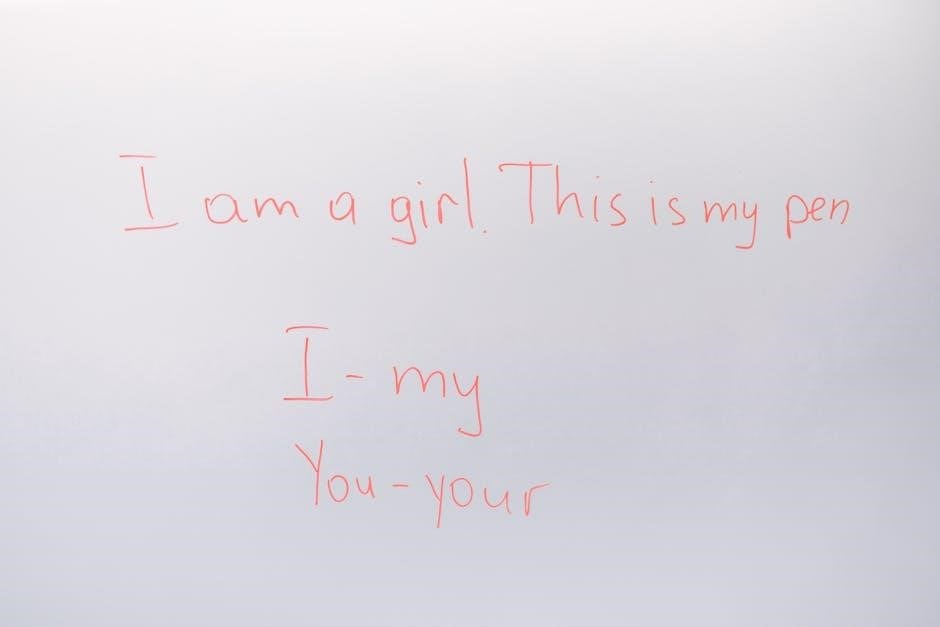
English Grammar in Use PDF expertly details the Past Perfect (I had done) and habitual actions using “used to (do)”, clarifying their distinct roles in narrative contexts.
Past Perfect (I had done)
The English Grammar in Use PDF comprehensively explains the Past Perfect tense (I had done), illustrating its crucial function in establishing the sequence of events in the past.
This tense is expertly presented as denoting an action completed before another action or a specific time in the past, providing essential context for understanding narratives.
The resource utilizes clear examples to demonstrate how the Past Perfect is formed – utilizing “had” + past participle – and how it contrasts with the Past Simple.
Learners benefit from detailed explanations of its usage in complex sentences, particularly when clarifying which action occurred first, enhancing their ability to construct coherent and accurate past narratives.
Furthermore, the PDF offers practice exercises designed to reinforce understanding and build confidence in applying the Past Perfect correctly in both written and spoken English.
Past Perfect Continuous (I had been doing)
The English Grammar in Use PDF provides a thorough exploration of the Past Perfect Continuous tense (I had been doing), clarifying its use in describing actions that continued for a duration before another point in the past.
This tense is skillfully explained as emphasizing the duration of an activity leading up to a specific past event, offering nuanced expression beyond the simple Past Perfect.
The resource details the formation – “had been” + present participle – and contrasts it with other past tenses, highlighting the importance of conveying ongoing actions.
Learners gain insight into scenarios where this tense is particularly effective, such as explaining the cause of a past situation or emphasizing the length of time spent on an activity.
The PDF includes targeted exercises to solidify understanding and enable accurate application of the Past Perfect Continuous in diverse communicative contexts, improving fluency and precision.
“Have” and “Have Got”: Usage and Differences
The English Grammar in Use PDF dedicates specific attention to the nuances between “have” and “have got,” both commonly used to express possession, obligation, or characteristics.
It clarifies that while “have got” is frequently used in British English for possession (I’ve got a car), “have” is more common in American English and also serves broader functions.
The resource meticulously details how “have” functions as an auxiliary verb in perfect tenses (I have done) and explains its use to express obligations (I have to study).
The PDF highlights that “have got” generally isn’t used to express obligations and is less versatile than “have” in forming different grammatical structures.
Through clear explanations and practical examples, learners gain a comprehensive understanding of when to use each form, enhancing their accuracy and fluency in both spoken and written English.
“Used to (do)”: Expressing Past Habits
The English Grammar in Use PDF provides a thorough explanation of “used to (do),” a crucial structure for conveying past habits or states that are no longer true.
It clarifies that “used to” describes actions repeated regularly in the past, but which do not occur now (I used to play football). The resource emphasizes the distinction between “used to” and the simple past tense, highlighting that “used to” focuses on the habitual nature of the past action.
The PDF also addresses the negative form (“didn’t use to”) and its common alternative (“used not to”), offering guidance on correct usage.
Furthermore, it explains how “be/get used to” differs, indicating adaptation to something rather than a past habit (I am used to the cold).
Through detailed examples and practice exercises, learners master this essential grammatical tool for accurately describing past routines and experiences.
Future Tenses and Review
English Grammar in Use PDF explores using present tenses (I am doing / I do) to discuss future plans and arrangements, offering a comprehensive review.
Present Tenses for Future Actions (I am doing / I do)
English Grammar in Use expertly details how present continuous and present simple tenses function to express future events, a crucial aspect of English fluency;
The PDF resource clarifies that the present continuous (I am doing) is utilized for planned arrangements and fixed future commitments, often with a time reference.
Conversely, the present simple (I do) denotes scheduled events, timetables, and situations governed by a fixed schedule, like train departures or program timings.
This distinction, thoroughly explained with examples, allows learners to accurately convey intentions and expectations regarding future occurrences.
Understanding this nuance is vital for effective communication, ensuring clarity and avoiding potential misunderstandings when discussing future plans and events.
The book provides ample practice to master this concept.