Hockey Stick Size Guide: A Comprehensive Overview (12/11/2025)
Navigating hockey stick sizing is crucial for performance and comfort. This guide details length charts for youth, junior, intermediate, and senior players, ensuring optimal stick selection.
Understanding Hockey Stick Sizing
Choosing the right hockey stick size is paramount for developing skills and maximizing on-ice performance. It’s not a one-size-fits-all scenario; proper sizing considers height, weight, and playing position. A stick that’s too long or too short can hinder puck control, shooting accuracy, and overall agility.
Generally, stick length is measured from the heel of the blade to the end of the shaft. Youth sticks typically range from 38 to 44 inches, while junior sticks fall between 46 and 53 inches. Intermediate players often use 54-inch sticks, and senior players generally prefer lengths from 56 to 63 inches.
However, these are just starting points. Flex, lie, and curve also play significant roles. Flex refers to the stick’s stiffness, influencing shot power and accuracy. Understanding these elements, alongside individual player preferences, is key to finding the perfect fit. A well-fitted stick enhances a player’s ability and enjoyment of the game.
Why Proper Sizing Matters
Incorrect hockey stick sizing significantly impacts a player’s technique and development. A stick that’s too long reduces control and makes quick movements difficult, hindering puck handling and passing accuracy. Conversely, a stick that’s too short limits reach and power, affecting shooting and defensive play.
Proper sizing fosters better balance and leverage, allowing players to generate more force with each shot and pass. It also promotes a more natural and efficient skating stride, improving agility and speed. Using the correct size minimizes strain and the risk of injury, particularly in the wrists and shoulders.
Optimized stick size builds confidence and allows players to focus on skill development rather than struggling with equipment. It’s an investment in performance, enabling players to reach their full potential on the ice. Ignoring proper sizing can create bad habits that are difficult to correct later.
Determining Your Height and Weight for Sizing
Height and weight are primary factors in initial hockey stick sizing. While not definitive, they provide a crucial starting point for finding the appropriate length. Generally, taller and heavier players require longer sticks to maintain control and leverage.
Youth players (6-8 years) typically range from 31-48 inches, correlating with heights of 97-142cm. Junior players (7-13 years) generally need 44-51 inches (132-155cm). These ranges are broad; individual builds matter.
Intermediate players often fall around 54 inches, while senior players typically use 56-63 inches. However, weight plays a role – heavier players within a height bracket may benefit from a slightly longer stick. Remember these are guidelines; the floor-to-forearm method (discussed later) offers a more personalized fit.
Consider body composition; muscular builds may necessitate a different length than leaner frames. Accurate measurements are key to a successful fit.
Youth Hockey Stick Sizing
Selecting the correct hockey stick for youth players is paramount for skill development and enjoyment. Younger players are still growing, making accurate sizing a bit more challenging. Prioritize a stick that allows for proper technique and control, rather than one they’ll “grow into.”
Youth sticks generally range from 31 to 48 inches in length, catering to players aged approximately 6-8 years old. Height is a significant indicator, with players between 97cm and 142cm typically fitting within this range. However, individual growth spurts and body types vary.
Focus on a stick that, when standing on a flat surface, reaches approximately between the player’s chin and nose. This provides a good starting point. Remember to consider the player’s skill level; beginners may benefit from a slightly shorter stick for easier handling.
Regularly reassess sizing as your child grows to ensure continued optimal performance and comfort.
Youth Stick Length Chart
- Ages 6-8: 31-48 inches (97-142cm)
This chart provides a more detailed breakdown of youth hockey stick sizing, correlating height and age with recommended stick lengths. It’s crucial to remember these are guidelines, and individual variations exist. Always prioritize observing the player’s stance and reach with a potential stick.
For players aged 6-8, with heights ranging from 3’3” to 4’8” (97cm ⎻ 142cm), a stick length of 31 to 48 inches is generally recommended. Within this range, consider the player’s build; taller or more coordinated children may benefit from a stick closer to the 48-inch mark.
Players around 4’9” (145cm) may begin to transition towards junior sizing, but a careful assessment is still necessary. A slightly shorter stick can aid in developing proper technique, while a longer stick might offer more power as skills progress.
Always encourage the player to try the stick on the ice to get a true feel for its suitability.
| Age | Height (cm) | Height (inches) | Stick Length (inches) |
|---|---|---|---|
| 6-8 | 97-142 | 38-56 | 31-48 |
Junior Hockey Stick Sizing
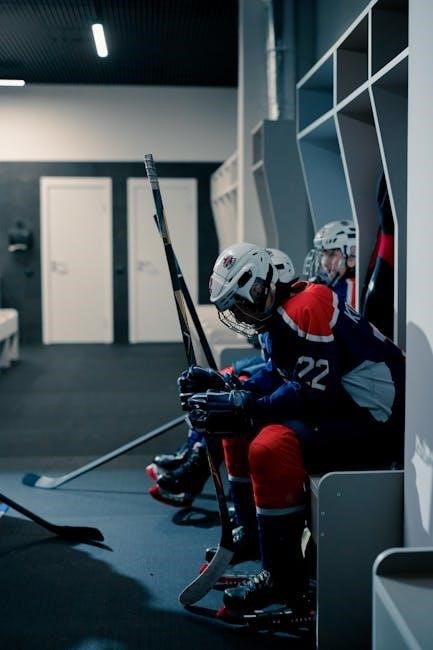
Transitioning from youth to junior sticks signifies increasing strength and skill development. Junior sticks are designed for players typically between 7 and 13 years old, though physical maturity plays a larger role than age alone. Proper sizing remains paramount for maximizing performance and preventing injury.
Generally, junior players fall within a height range of 4’9” to 5’6” (145cm ⎻ 168cm). Corresponding stick lengths typically range from 44 to 51 inches. However, this is a broad guideline, and individual assessment is vital.
Consider the player’s skating ability and position. More aggressive, offensive players might prefer a slightly longer stick for increased reach, while defensive players may benefit from a shorter stick for quicker handling in tight spaces.
It’s crucial to observe the player’s posture while holding the stick. Their elbows should be bent at approximately a 90-degree angle when the stick is positioned for a shot.
Remember to consult the Junior Stick Length Chart for a more precise recommendation based on height and weight.
Junior Stick Length Chart
This chart provides a general guideline for selecting the appropriate junior hockey stick length, based on height and weight. It’s essential to remember that these are recommendations, and individual preferences and skating style should also be considered.
Here’s a breakdown of typical sizing:
- Height: 4’9” – 5’0” (145cm – 152cm) & Weight: 70-90 lbs (32-41kg): Recommended Stick Length: 44-46 inches
- Height: 5’0” – 5’2” (152cm – 157cm) & Weight: 90-110 lbs (41-50kg): Recommended Stick Length: 46-48 inches
- Height: 5’2” – 5’4” (157cm – 163cm) & Weight: 110-130 lbs (50-59kg): Recommended Stick Length: 48-50 inches
- Height: 5’4” – 5’6” (163cm – 168cm) & Weight: 130-150 lbs (59-68kg): Recommended Stick Length: 50-51 inches
Always prioritize a comfortable and controlled feel. If a player falls between sizes, it’s often best to start with the shorter length and gradually increase as they grow and develop. Proper fit enhances skill development and prevents strain.
Remember to combine this chart with the floor-to-forearm measurement method for a more personalized assessment.
Intermediate Hockey Stick Sizing
Intermediate hockey sticks are designed for players who have outgrown junior equipment but aren’t yet ready for a full-sized senior stick. Typically, this category suits players experiencing a growth spurt or those needing a stick with a slightly thinner shaft and lower flex than senior models.
Generally, intermediate sticks range from approximately 54 to 57 inches in length. Height and reach are key factors; players around 5’6” to 5’10” often find an intermediate stick suitable.
Weight also plays a role. Players weighing between 130-160 lbs may benefit from the lighter weight and more manageable feel of an intermediate stick.
It’s crucial to consider the player’s strength and skill level. A stick that’s too stiff or heavy can hinder development, while one that’s too light might lack power. The floor-to-forearm method remains a valuable tool for precise sizing.
Flex is also important; intermediate players often use flexes ranging from 65 to 75.
Senior Hockey Stick Sizing
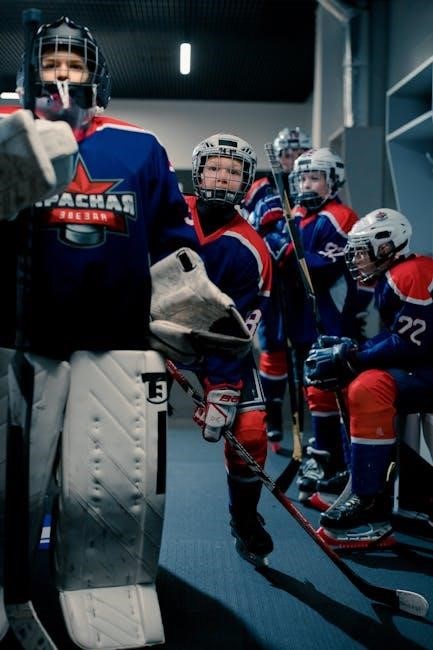
Senior hockey sticks are the standard for adult players and typically accommodate individuals over 5’10” in height. These sticks offer a wider range of flex options and are built with materials catering to stronger, more developed players.
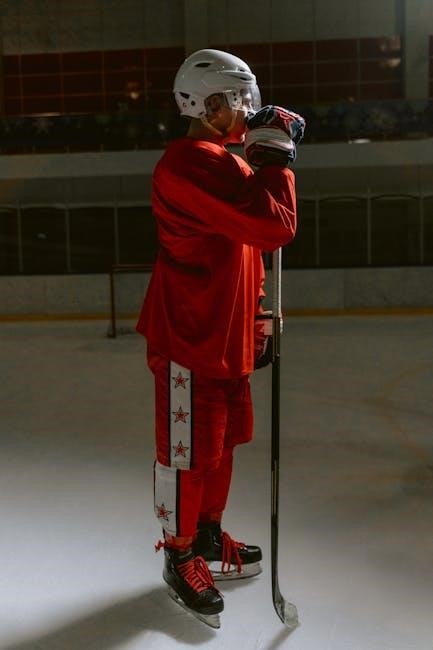
The typical length range for senior sticks is 58 to 63 inches, though some players may prefer slightly longer or shorter options based on personal preference and playing style. Players exceeding 6’2” may benefit from a 63-inch or longer stick.
Weight is less of a concern for senior players, as they generally possess the strength to handle heavier sticks. However, lighter sticks can enhance quickness and maneuverability.
Flex selection is critical. Senior players typically utilize flexes ranging from 50 to 85, depending on shot power and frequency. The floor-to-forearm method is highly recommended for accurate length determination.
Consider your position; defensive players might prefer a stiffer flex for shot blocking, while forwards may opt for a lower flex for quicker releases.
Senior Stick Length Chart
This chart provides a general guideline for senior hockey stick length based on player height. However, individual preferences and playing style significantly influence the ideal stick length, so consider this a starting point.
Height (inches) | Recommended Length (inches)
- 60-63” | 58-60”
- 64-67” | 60-62”
- 68-71” | 62-63”
- 72-75” | 63-65”
- 76”+ | 65″+
Remember that these are approximate values. Players with longer arms may prefer a longer stick, even within a specific height range. Conversely, players with shorter arms might opt for a shorter stick.
The floor-to-forearm method (described elsewhere in this guide) offers a more personalized measurement. Always prioritize comfort and control when selecting a stick length. A properly sized stick enhances performance and reduces the risk of injury.
Experimentation is key! Don’t hesitate to try different lengths to find what feels best for you.
Measuring Hockey Stick Length – The Floor to Forearm Method
The floor-to-forearm method is a precise way to determine your ideal hockey stick length. This technique accounts for individual body proportions, offering a more personalized fit than relying solely on height charts.
Here’s how to do it:
- Stand with your skates on, in your typical hockey stance – slightly bent knees.
- Extend one arm straight out in front of you, as if holding a stick.
- Have someone measure the distance from the floor to your forearm, specifically to the crease of your wrist.
- This measurement, in inches, is a good starting point for your stick length.
Consider adding 1-2 inches to this measurement for a more comfortable and controllable stick length. Remember to account for your playing position – defensemen often prefer slightly longer sticks.
This method provides a valuable reference, but personal preference remains crucial. Fine-tune the length based on feel and performance on the ice.
Hockey Stick Flex Explained
Hockey stick flex refers to the amount of force needed to bend the stick, impacting shot power and accuracy. It’s a critical factor in selecting the right stick, influencing how energy transfers from your hands to the puck.
Flex is represented by a number (e.g., 75, 85, 100) indicating the pounds of force required to flex the stick one inch. Lower flex numbers are easier to bend, suitable for players with quicker wrist shots and less upper body strength.
Higher flex numbers require more force, offering greater power and control for stronger players. Generally, heavier players and those with faster swing speeds need higher flexes.
Choosing the correct flex is vital; too stiff, and you’ll lose feel and power. Too whippy, and you’ll sacrifice accuracy and control. Consider your weight, strength, and shooting style when selecting a flex.
Understanding Flex Numbers
Decoding flex numbers is essential for optimal stick performance. A lower number, like 60 or 75, signifies a softer stick, bending more easily with less force applied. These are ideal for lighter players or those prioritizing quick releases and wrist shots, enhancing puck feel.
Conversely, higher numbers – 85, 95, or even 100+ – represent stiffer sticks demanding greater strength to bend. These cater to heavier players or those with powerful, deliberate shots, maximizing energy transfer and shot velocity.
The relationship isn’t solely weight-dependent. Swing speed plays a crucial role; faster swings require stiffer flexes to prevent “loading” issues. A general guideline suggests subtracting your weight (in pounds) from 100 to estimate a suitable flex, but this is a starting point.
Experimentation is key. Don’t hesitate to try different flexes to find what feels most comfortable and allows you to generate the most effective shots.
Lie and Curve Considerations
Lie refers to the angle between the blade and the shaft when the stick is resting flat on the ice. A proper lie ensures the blade sits flush, maximizing puck control and preventing awkward shooting angles. Incorrect lie can lead to missed passes and inaccurate shots.
Curve dictates the blade’s face shape, influencing puck handling, shooting, and passing. Curves range from subtle to extreme, each offering unique advantages. A mid-curve is versatile, suitable for all-around play, while a more pronounced curve aids in lifting the puck.
Lie selection depends on skating style and stance. Players with an upright stance often benefit from a higher lie, while those with a more crouched posture may prefer a lower lie. Curve preference is largely personal, influenced by shooting style and position.
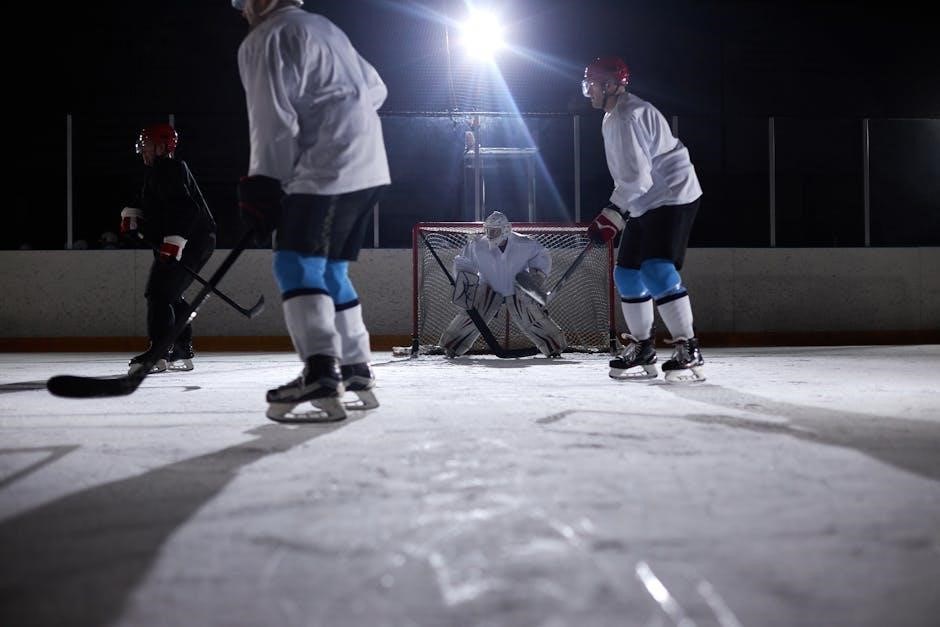
Consider your playing style when choosing; a wrist shot specialist might favor a different curve than a slap shot specialist. Experimentation is vital to find the optimal combination for your game.
Blade Pattern and its Influence on Size
Blade patterns significantly impact puck control, shooting, and passing, influencing the overall feel and performance of the stick. Common patterns include closed, open, and hybrid designs, each catering to different playing styles.
Closed blade patterns offer a cupped face, enhancing puck retention and facilitating quick, accurate wrist shots. These are favored by players prioritizing puck handling and deception. Open blade patterns feature a flatter face, promoting faster release and powerful slap shots.
Hybrid patterns blend characteristics of both closed and open designs, providing versatility for all-around play. The size of the blade, measured by its width and length, also affects performance.
Wider blades offer a larger surface area for puck control, while narrower blades promote quicker stickhandling. Blade size should complement your hand size and playing style, ensuring a comfortable and responsive feel. Experimentation is key to finding the ideal blade pattern and size.
Adjusting Stick Length for Position
Optimal stick length varies based on a player’s position and individual preferences, impacting reach, shooting mechanics, and puck control. Generally, defensive players often prefer a longer stick for enhanced reach during poke checks and puck interceptions.
Forwards typically opt for shorter sticks to improve maneuverability, quick stickhandling in tight spaces, and faster shot release. Goalies require specialized sticks with unique lengths and blade curves tailored for blocking shots and directing rebounds.
A common adjustment is to shorten a stick by 1-2 inches for quicker handling, while adding length provides greater reach. Consider your skating style and physical build when making adjustments.
Experimenting with different lengths is crucial to find what feels most comfortable and allows for optimal performance. Remember, a properly adjusted stick enhances your game and minimizes the risk of injury.
Resources for Further Sizing Assistance
Finding the perfect fit extends beyond charts and guides. Local hockey retailers offer expert fitting services, allowing you to physically test different stick lengths and flexes with guidance from knowledgeable staff. Many retailers provide personalized recommendations based on your height, weight, skill level, and playing position.
Online resources, such as manufacturer websites (like Grays Hockey and Kookaburra), often feature detailed sizing tools and FAQs. Hockey forums and online communities provide valuable insights from experienced players who can share their sizing experiences.
Consider consulting with a hockey coach or trainer for personalized advice. They can assess your technique and recommend adjustments to optimize your performance. Don’t hesitate to utilize multiple resources to ensure a confident and informed decision.
Remember, proper sizing is an investment in your game, enhancing comfort, control, and overall enjoyment on the ice.